Toronto Chimney Repair · November 28, 2026
Crown or cap? Two different parts
The crown is the slab of concrete or mortar covering the top of a brick chimney, poured around the flue tiles. Its only job is to throw rain and snowmelt off the top and away from the brick. A cap is the metal hood with a screen that sits over the flue opening, keeping out rain, leaves and raccoons. A chimney can have a sound crown and no cap, or a good cap bolted onto a crown that is falling apart.
The words get mixed up because the National Building Code of Canada calls the concrete top a chimney cap. Whatever you call it, the code wants it waterproof, sloped, and finished with a drip so water falls clear of the brick instead of running down the face. Tarion's Construction Performance Guidelines for new Ontario homes put it plainly too: chimney caps shall be waterproof, and cracks in masonry caps can develop because of the harsh conditions they sit in.
Why crowns crack in the GTA
The National Research Council's notes explaining those code rules lay out the chain of damage. Rain or melting snow gets in through cracks in the top or gaps beside the liner, freeze-thaw stresses break up the masonry or the liner, and in the worst case the chimney can collapse. Winters near Lake Ontario swing above and below freezing many times, and each swing lets a little more water into a crack before it turns to ice and pries it wider.
Three things make it worse on older houses here:
- A top troweled from ordinary mortar instead of a real concrete crown, often thin, flat and flush with the brick, with no overhang
- No room left around the flue tile. The NRC notes point out that a liner grows taller as it heats up, and a crown cast tight against it can crack or lift
- Years without a cap, so water sits on the crown and soaks down the flue
Reseal, repair or rebuild
What the crown needs depends on how deep the damage goes, and that is judged up close on the roof rather than from a photo taken below.
- Fine hairline cracks in a crown that is still solid: cleaned out and sealed with a flexible crown sealant, at the low end of $229 to $600 plus HST
- Open cracks, a broken corner or a gap around the flue tile: loose material is chipped off, then the crown is patched and resealed, toward the upper end of that range
- A crumbling or flat crown with no overhang, and loose joints in the bricks just below it: the old top is broken off, a new crown is cast with a slope and drip edge, and the top courses are repointed, about $1,700 plus HST
What you can check from the ground
Stay off the roof, especially once there is snow or ice on it. From the sidewalk, a back window or across the street, zoom in with a phone camera and look for these signs:
- Dark lines or open cracks across the top slab
- Corners broken away, or grey chunks of concrete in the eavestrough
- White staining (efflorescence) or flaking brick on the top few courses
- A stain on the ceiling or wall beside the chimney, or drips in the firebox after rain
Can crown work be done in winter?
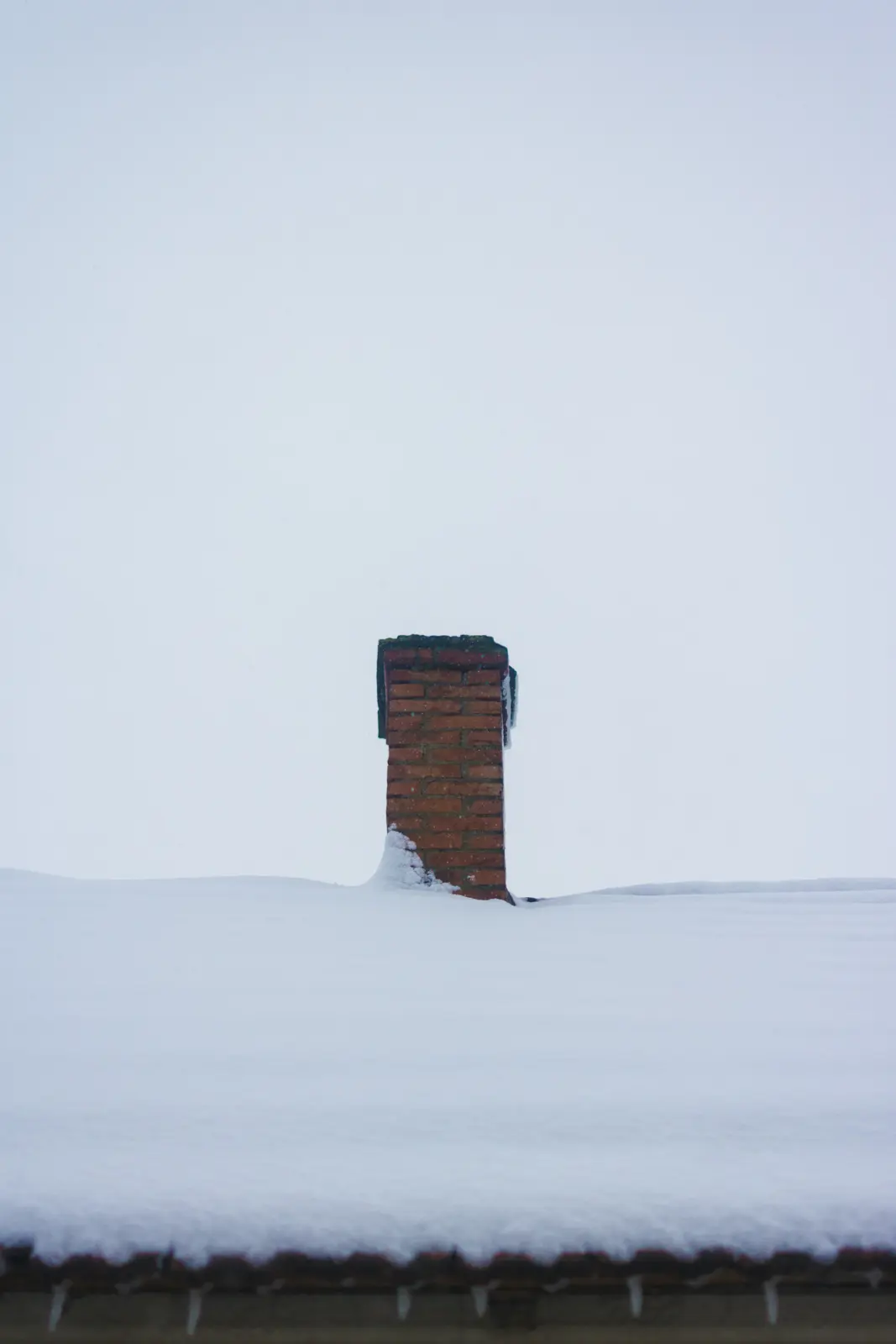
Some of it can. Cement-based crown mixes and mortar need weather above freezing to set properly, so a full recast is usually planned for a mild stretch or for spring. A crack can often be sealed on a dry, mild day, a cap can go on to keep snow off the top, and the inspection can happen any time so the repair is priced and booked before spring.
Waiting has a cost. Sealing over a crown that is already in pieces only hides the problem for a season, and a crown left open feeds water into the brick below. That is how a crown job turns into a spalling repair, where brick replacement and repointing usually runs $800 to $1,700 plus HST, or eventually into a rebuild from the roofline.